

Seafarers Rest Park and spring
On 1 September 2019, the first day of spring, Joost Bakker invited Melburnians to help themselves to tulips. 150,000 tulips for the taking, laid out row on row.
The bountiful tulip give away was a bitter sweet moment for Bakker. It was the last crop of tulips harvested from his brother’s farm. He was no longer able to compete with cheaper imported flowers.
The platform for this generous moment was the decayed concrete wharf apron at North Wharf, between Shed No 5, the Mission to Seafarers and the Yarra, Birrarung.
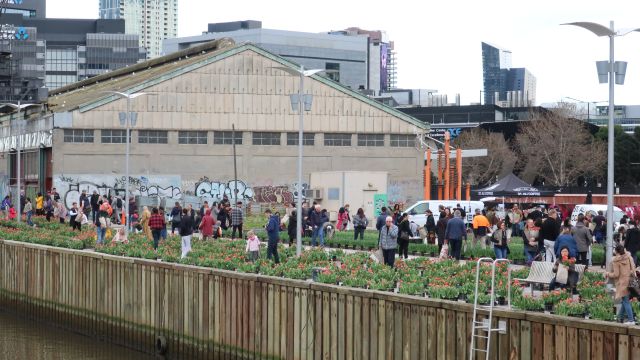
This section of North Wharf became redundant with the advent of container shipping and after the Charles Grimes Bridge made it inaccessible to shipping.
Riverlee acquired the site. As part of the planning approval, Riverlee committed to restoring the wharf structure, restoring the Malcolm Moore crane, restoring Shed No 5, and delivering a new park – to be known as Seafarers Rest Park.
Seafarers Rest Park opened in June this year.
OCULUS designed this thoughtful 3500 sq m park of many elements for many users. The park reflects feedback on what people wanted for the park: trees retained, maritime heritage referenced, more nature, and welcoming to children.
All this has been accomplished without the park feeling over crowded.
Trees, formerly hidden from view, have been retained and respected.
The pathways are clear and wide and connect with the wider walking and cycling network.
Views to the Mission to Seafarers are unencumbered.
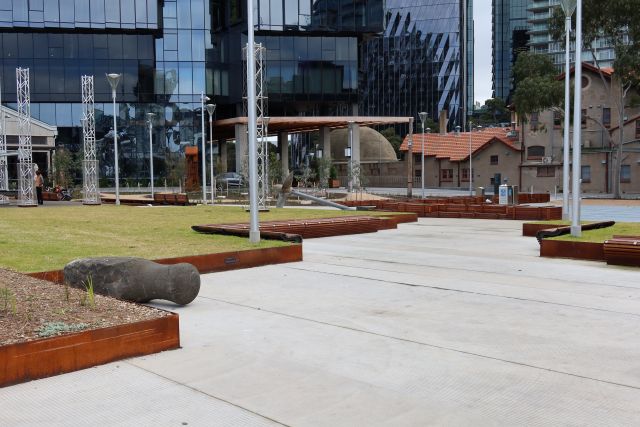
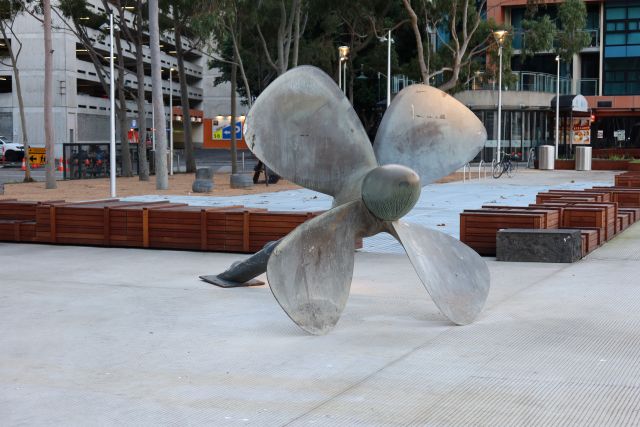
A propeller and a fluke anchor are featured. A fluke anchor is one which can get a grip on a sandy sea floor. The park is not overloaded with maritime artefacts.
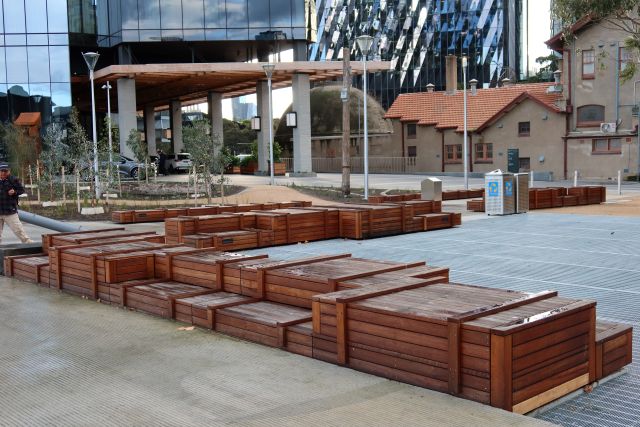
The seating references the unitised boxes that preceded the container.
The park incorporates flower beds of indigenous plants – full of the promise of bees and butterflies. Logs provide some habitat, and there’s a bat box too.
The children’s playground incorporates rope structures, a swing, and a small in ground trampoline.
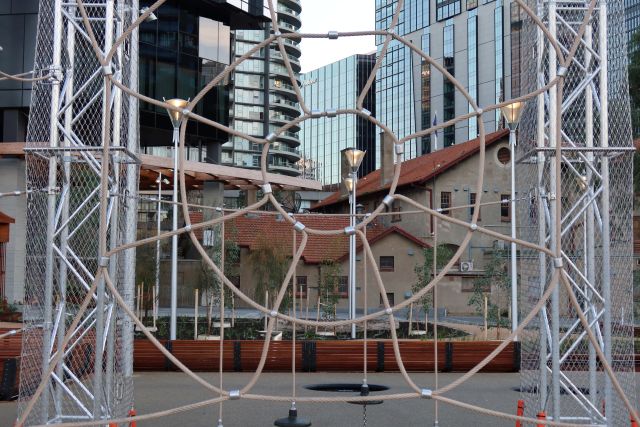
Seating is configured around a space that could be used for performances in future.
This will be a hard working park catering for many users at all times of day.
Several small food businesses mightily inconvenienced during construction will hopefully benefit from the greater number of people visiting.
Associate Director and project leader at OCULUS, Claire Martin sums up the project “Melbourne’s latest 21st century park design protects and enhances Melbourne’s maritime heritage, reinforces our relationship to the Yarra River (Birrarung) and increases urban biodiversity to create a place that couldn’t occur in quite the same way anywhere the world.”
National Wattle Day
1st September is National Wattle Day. It was first celebrated in 1910 as an assertion of Australian identity and was formally proclaimed as a National Day by Governor General Bill Hayden in 1992.
The Wattle Day website lists many reasons why wattle is such a positive unifying symbol for Australia, not least of which is the diversity of the species suggestive of Australia’s diverse population.
Even so, Wattle Day observes the four seasons calendar.
Seven Seasons
This artwork of the Seven Seasons by Wurundjeri artist Ky-ya Nicholson-Ward is on the Wilami Wunmabil Trail along the Moonee Ponds Creek.
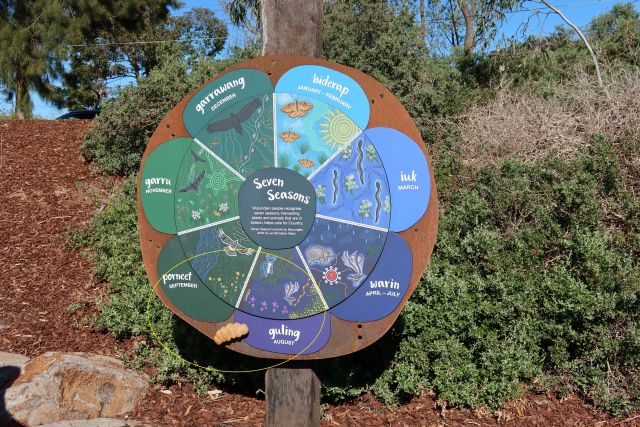
It illustrates the changes across the Wurundjeri seasonal calendar. The seasons describe observations of the plants and animals observed at that time. The calendar features a carved timber grub. The students from nearby Strathmore North Primary School hold the key. They move it when the season changes.
Wurundjeri Woi Wurrung Cultural Heritage Aboriginal Corporation Ancestors and Past
Leave a Reply