
Container deposit scheme
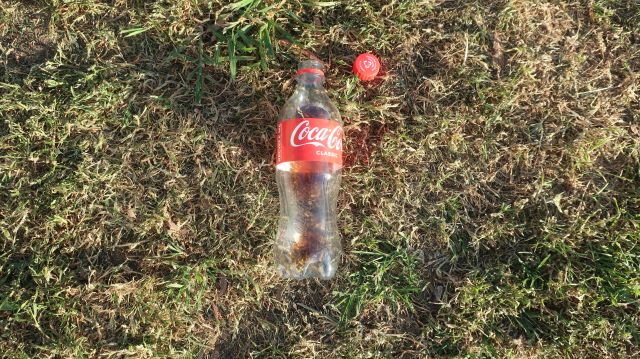
Friday 1 November was the first anniversary of the introduction of the Container Deposit Scheme (CDS) in Victoria. In one year, over one billion containers have been collected at 647 collection sites across the state. $100 m has been returned to communities through the 10c deposit on each returned container.
Win. Win. Win.
Clean recyclable material, less litter, and money returned to communities.
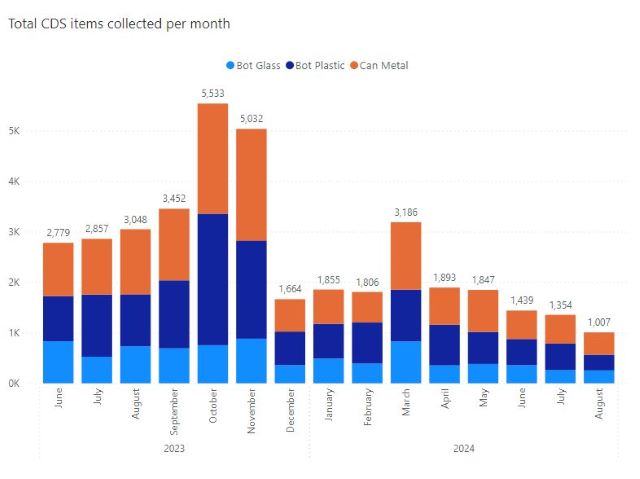
Beach Patrol record the data from each monthly beach clean on the Litter Stopper app. The data shows the steep reduction in containers collected on Port Phillip Bay beaches since the introduction of the scheme. While the reduction is impressive, 1,067 containers were still collected from beach cleans in August. There’s a way to go.
There’s always more to be done to reduce plastic pollution.
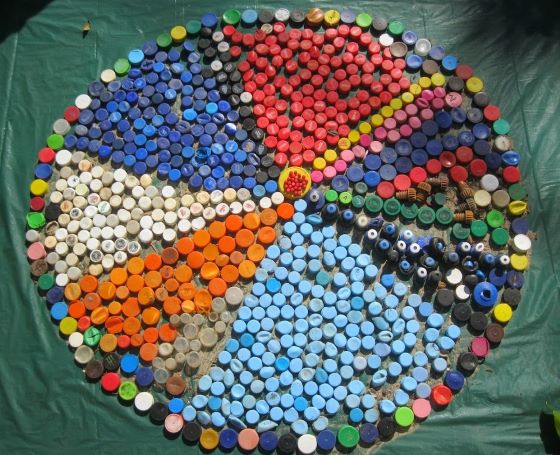
Lids from plastic bottles are a big category of litter collected in beach cleans.
The design of a product affects how readily it becomes litter.
Bottle lids are made with a more buoyant type of plastic that the bottles they are sold with, and can travel further in waterways1.
A simple solution is to require the lids to be tethered to the container. This is now a requirement in the EU following a directive enacted in July that all single-use bottles must now have caps that remain attached.
This will become a focus for future advocacy in Australia.
Dr Ross Headifen, co-founder of Beach Patrol, is a leading advocate for plastic waste reduction. His conclusions are always drawn from his close observations from more than a decade of litter clean ups.
He looks critically at the design of the aluminium can. He notes several design features which contribute to cans being discarded.
- the flat top doesn’t allow draining fully. Residual drops leak if the can is put in a bag so it is disposed of quickly.
- the can needs to be tilted vertically to get the last drop.
- cans do not have a resealable lid
Beach Patrol volunteers report needing to empty cans before collecting them.
The design of the can is driven primarily by shipping and storage considerations, rather than consumer convenience.
Headifen then looks at another aluminum drink container which doesn’t have these design flaws.
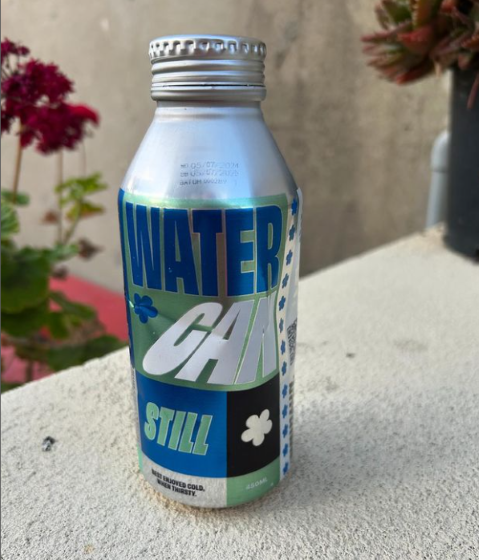
- the bottle has a tapered neck making it easy to drink from. It only needs to be tilted 45 degrees
- it is re-sealable (even though a tethered lid would be preferable)
What’s not to like?
The can contains 450mL of water.
All that resource! First the aluminium ore needs to be mined, then the bauxite is refined into alumina (aluminium oxide).
All that energy! Large amounts of electricity are used to smelt the alumina into aluminium metal.
All that design thinking applied to a container for water. A quick scan suggests a 450mL bottle of water sells for between $3.50 and $4.
A typical Melbourne household can expect to pay an average of $2.81 per day for the water they use for the financial year 2024/20252.
Melbourne Water provide high quality clean water – the water we can safely drink from the tap, the water we use for washing ourselves, our clothes and dishes. They provide safe treatment and disposal of sewage. They are responsible for the health of our waterways. They provide flood management.
Melbourne Water is preparing a price submission for the services they will provide in the years 2026 to 2031. The submission is reviewed by the Essential Services Commission to determine what we will pay for water in that period. Melbourne Water must make a convincing case to the ESC for their recommended charge for their services.
In developing the pricing submission, Melbourne Water must anticipate and provide for the future challenges of population growth, a changing climate, ageing infrastructure, and the health of waterways. All this needs to be taken into account while weighing up what people can afford.
Acknowledging that this piece is drawn from various articles and posts by Dr Ross Headifen.
1 Randa Lindsey Kachef Why plastic bottles now have their caps attached, The Conversation, 2 October 2024


Anne Garrow
Very interesting points about the importance of design. Thank you.