
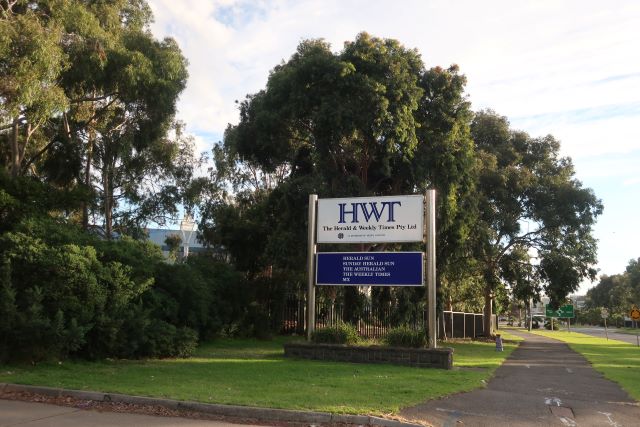
Data centres in Fishermans Bend
Demolition of the former Herald and Weekly Times plant at 127 Todd Road, Fishermans Bend, has been underway for several weeks.
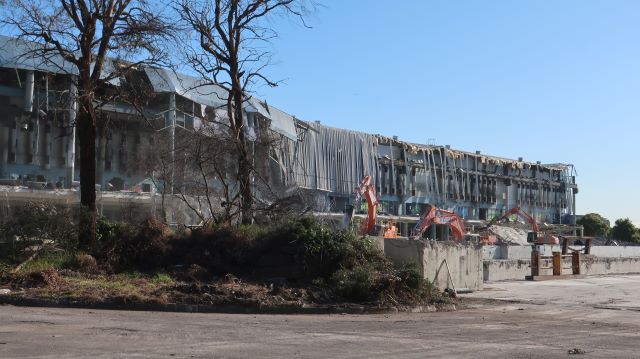
The large 58217 sq m site was purchased in 2019 for $55,000,000.
It is set to become M4, a new data centre for NEXTDC. NEXTDC already has a data centre in Fishermans Bend at 826 Lorimer St.
The M4 centre anticipates a growth in demand for computing power that will be generated by private AI. Private AI refers to ‘an AI environment built by or for a specific organization, to be used exclusively by that organization’1 as opposed to AI like Chat GPT.
Data centres use large amounts of energy and water for cooling. Computers generate heat when operating in their cabinets. The centres must be cooled either using evaporative cooling or air cooling to operate smoothly. Evaporative cooling uses a lot of water, and air cooling uses a lot of energy.
Data centres operators in Fishermans Bend invest heavily in renewable energy
Equinix, also in Fishermans Bend, is a US based company with 264 data centres around the world, 17 of them in Australia. In February, Equinix signed a Power Purchasing Agreement (PPA) in Australia with TagEnergy to purchase 151 megawatts of renewable energy from Golden Plains Wind Farm – East in Victoria. Once operational in 2029, this will supply enough energy to the grid to cover Equinix’s data centres across Australia. Equinix aims to achieve 100% global renewable energy coverage.
To date, most data centres have been low rise, box like and squat. In more space constrained settings, data centres are going vertical.
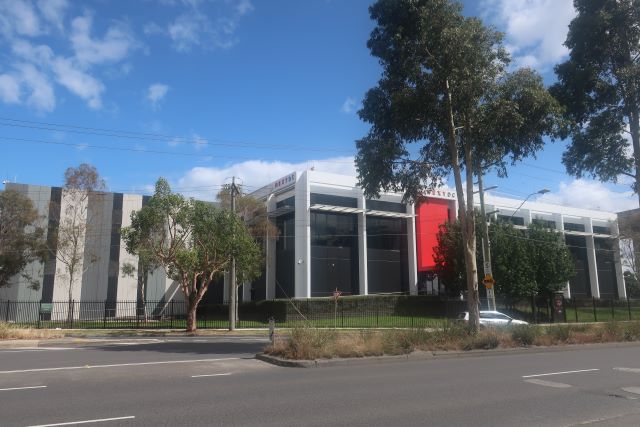
There is a growing expectation that data centres improve their presentation to the street as well as continually drive down their energy and water use.
Data centres being designed now must anticipate future climate extremes, as well as for the heat generated through day to day operations. Since business continuity is so fundamental to this infrastructure on which we increasingly rely, investment is made in energy redundancy, further increasing energy use.
When Nicholas Gadd walked through Fishermans Bend in 2016 completing his Melbourne Circle walk, he noted a ‘forlorness’ about the place suggesting transition ahead. He wrote ‘here’s a big Herald and Weekly Times plant, for example – but who knows how long newspapers will survive?
From newspapers to AI.
1 Ruth Faller What is private AI? Equinix 16 November 2024
4 Comments
-
-
Thanks Shake. Writing this post alerted me to the power, and water, demands of AI and how they will be met.
-
-
Thanks Janet for the post. I recent recognition for me that data centres are now using as much energy and water as a medium-sized country. And are expanding their scale and therefore consumption. We are trending in the wrong direction on two many vectors. When computers came in it was thought that would reduce the amount of paper for copying. It didn’t. No, the reverse. (Though having written that I am wondering if more recent years as things are stored in the cloud and more has moved online if in fact that is not the case. Has paper consumption gone down per head?) Then too many suburban people started driving large 4WD - safer for you, less safe for everybody else. Now these RAMS are increasing, as big as a Sherman tank, the graph of growth is the same in Europe as in America and Australia.
-
Thanks Andrew. Reading for this article opened my eyes to AI's insatiable appetite for energy and water.
-


Shake
A delightful mix of old and new Janet. Sailors dressing the yard traditionally on a wind powered boat and data centres powered by renewables too ( old fashioned wind + solar). How exciting to be in port this spring weekend!