
Litter and the high tide line
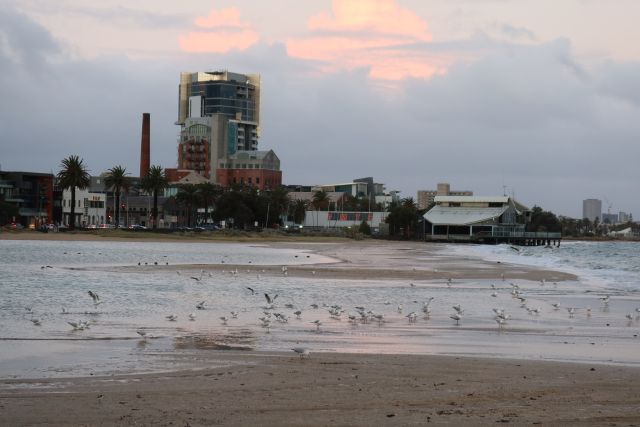
There have been high tides in Port Melbourne this week – from 1.05 to 1.1 m – creating temporary wetlands on the beach. Silver gulls abandoned the bins for the bay to feed amongst the seaweed suspended in the waves. The high tide was accompanied by strong onshore winds.
Onshore winds tend to bring litter onto the beach. I walked the seaweed tide line. There were plastic fragments threaded through it, yes, but noticeably fewer than I would have expected on the basis of observations over many years.
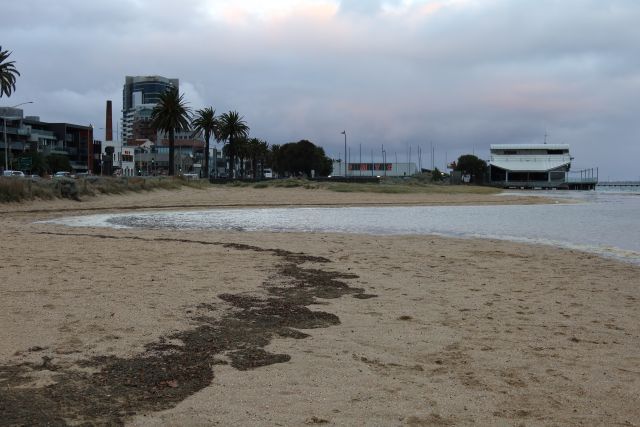
It struck me as unusual. Does it mean there is less plastic litter on our beaches?
A recent CSIRO study1 found a 39 per cent reduction in plastic waste in coastal areas over the past decade. Note that this national study did not include Melbourne.
Meanwhile, the ABC reported2 on Dr Jen Lavers shocking and disturbing findings from Lord Howe Island where the amount of plastic ingested by shearwaters has increased dramatically over the years she has been visiting the island.
‘There is now so much plastic inside the birds you can feel it on the outside of the animal when it is still alive. As you press on its belly … you hear the pieces grinding against each other.’2
In 2011, the number of plastic straws on Port Melbourne beach was so striking that I started collecting them. Casually. Not systematically. The collection grew and grew.
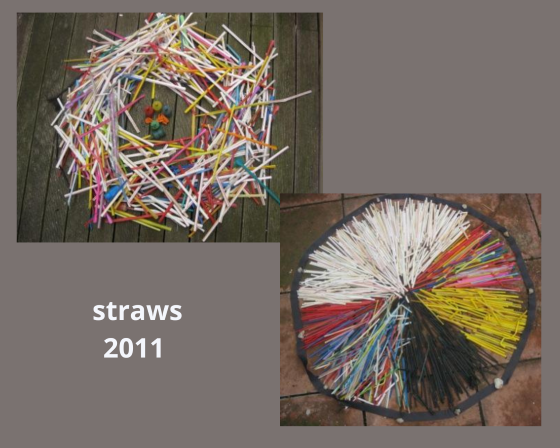
In 2017, Ross and Ramona Headifen from 3207 Beach Patrol initiated #thelaststraw project to encourage local cafes to use paper instead of plastic straws. There was some take up but it was uneven. Pressure was growing for the government to take action on single use plastic items.
In 2023, the Victorian Government introduced a ban on single use plastics including plastic straws.
Now plastic straws have receded as a problematic item.
So what are the most littered items on Port Melbourne’s beaches?
Once told that since there was no data, there was no litter problem, Beach Patrol made data collection a priority. It is a data driven organisation. After each monthly beach clean, litter is sorted into categories and entered on the Litter Stopper app.
Through Beach Patrol’s work we can get a picture of the situation on Port and other Bay beaches.
The most commonly found items are soft plastic <5mm, and hard plastic < 5mm, followed by food wrappers. Microplastics.
For the year to date, this means 1277 Food wrappers, 5139 pieces of soft plastic <5mm, and hard bits 2434 < 5mm. It obviously does not include all of the items present on Port’s beaches, just those that have been collected and counted.
The number of plastic bottles collected has decreased following the introduction of Victoria’s Container Deposit Scheme on 1 November 2023. There is fierce competition now for dropped bottles with over a billion containers collected since the scheme began.
Bottle caps are now one of the more frequently collected items in the monthly clean. Year to date, 1032 bottle caps have been collected on Port’s beaches.
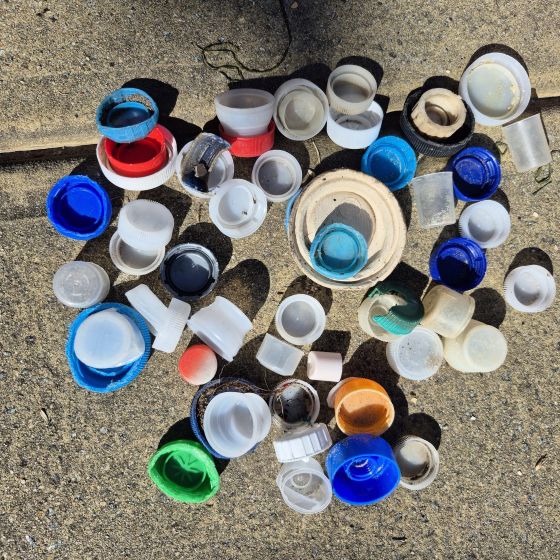
Beach Patrol supports the campaign for tethered caps, so that the cap remains attached to the bottle. This is now required in Europe following the European Union’s Single-Use Plastics Directive 2019/904
3207 Beach Patrol has been conducting monthly beach cleans since 2009. Just one hour of commitment once a month. Powerful community connections have been made. Everyone participating wants to prevent that plastic entering the bay and harming wildlife.
Valuable and important though it is, picking up litter is an ‘end of pipe’ approach.
Plastic use in Australian is anticipated to double by 20503.
Only a small proportion of plastics is recycled, and that percentage is declining. Recycled actually means downcycled – meaning that items of lesser quality or value are created. Recycling is beset with issues. Collection systems are expensive. Recycling plastic is energy and water intensive, and microplastics make their way into the air and waste water. It’s much cheaper to use virgin plastic pellets than to use recycled material. There is also a limited market for recycled plastic products.
We must reduce consumption and production of plastic, and extend producer responsibility.
Picking up and disposing of stray plastic will remain essential while wider solutions are campaigned for, and adopted.
More
Join 3207 Beach Patrol. The next beach clean is on Saturday 7 June at 9 am
Use the Litter Stopper app to add the results from your litter pick up. Free to download
1 CSIRO Plastic pollution along Australian coastlines decreases by 39 per cent
1 Losing the war on waste Jake Evans ABC
3 Plastic waste in Australia and the recycling greenwash Lillia Anderson and Nina Gbor Australia Institute
4 Comments
-
-
thanks Kate - yours in Pat.
-
-
Heather Wheat
Do we know how Melbourne Water handles microplastics? These must certainly come through the waste water system in quantities.
-
Hi Heather, since our drinking water comes from the protected catchment, I imagine it's less of an issue, and that water goes through rigorous processes. My point was more about plastic recycling where the controls may not be so stringent.
-



Kate
thanks Janet really interesting from Pats friend and neighbour Kate x